Mahabalipuram: Heart of Indian Temple Sculpture
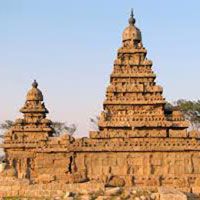
Mahabalipuram, located in the Kanchipuram district of Tamil Nadu, is renowned as one of the most popular destinations for tourists and devotees exploring South India’s temple circuit. Its magnificent temples, adorned with exquisite architecture, along with its serene beaches, attract thousands of visitors each year. This 7th-century seaport is fondly referred to as one of the kingdoms of Backpackistan, offering a delightful blend of culture, cuisine, and spirituality. It consistently ranks among the top ten most visited places in India.
During the reign of the Pallavas, Mahabalipuram—also known as Mamallapuram—was considered one of the most significant port cities of South India. Thirumangai Alvar, one of the revered saints of South India, described Mahabalipuram as the 'sea mountain'. Today, the destination is famous for its three stone temples, nine monolithic shrines, fourteen rock-cut temples, and beautiful beaches.
Following are the main attractions of Mahabalipuram
The Shore Temple: Built around 700 AD, the Shore Temple was constructed during the reign of Pallava king Narasimhavarman II Rajasimha. The intricate craftsmanship is evident in the precise, block-by-block construction carved from solid rock. Due to its proximity to the Bay of Bengal, parts of its outer structure have eroded over time. The temple complex comprises three shrines—two dedicated to Lord Shiva and one to Lord Vishnu.
Arjuna's Penance: This massive open-air bas-relief, measuring approximately 30 m long and 50 m high, dates back to the 7th century and is considered one of the greatest masterpieces of ancient Indian sculpture. The monument derives its name from Arjuna, one of the Pandavas in the Mahabharata, who performed intense penance to obtain a divine weapon from Lord Shiva. Another interpretation suggests that the relief depicts the descent of the Ganga after the prolonged penance of King Bhagiratha.
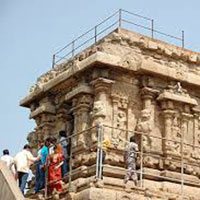 Mahishamardini Mandapa: Also known as the Cave Temple, the Mahishamardini Mandapa is a remarkable example of Indian rock-cut architecture. Located atop a hill along with other cave temples, this mandapam features carvings depicting scenes from the 5th-century Puranas. The sculpture of Goddess Durga slaying the demon Mahishasura is particularly admired for its artistic finesse.
Pancha Rathas: This group of rock-cut temples was created during the 7th century under the Pallavas. The five shrines are named after the Pandavas of the Mahabharata—including the Dharmaraja Ratha and the Draupadi Ratha. The smallest among them is the Draupadi Ratha. These monuments represent the evolution of the Dravidian style of architecture and are carved from single monolithic rocks.
Mahabalipuram Beach: One of the longest and cleanest beaches in India, this coastline is home to several ancient monuments located nearby. A popular attraction is the crocodile farm, which houses nearly 5,000 crocodiles belonging to six different species.
Shopping in Mahabalipuram: Tourists frequently purchase finely crafted granite statues from Mahabalipuram, known for its remarkable temple architecture and sculptural tradition. These granite artworks are exported to several countries, including Denmark, the United Kingdom, Singapore, and Germany.
 Excursions from Mahabalipuram: Tourists can travel to nearby cities such as Chengalpattu (29 km), Chennai (50 km), Kanchipuram (67 km), and Cheyyar (97 km).
When to Reach: The best time to visit Mahabalipuram is between October and March, when the weather is ideal for sightseeing and outdoor activities.
How to Reach:
Air: Chennai Airport is approximately 59 km from Mahabalipuram. Both international and domestic flights connect Chennai with major cities across India.
Rail: The nearest railway station is at Chengalpattu, around 29 km away.
Road: Frequent buses connect Mahabalipuram with nearby cities such as Chengalpattu, Pondicherry, Chennai, and Kanchipuram.