Deoghar : The Abode of Gods in Jharkhand
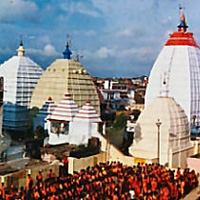
Located in the Santhal Parganas of Jharkhand, Deoghar is renowned across India as the “Baidyanath Dham.” The Baidyanath Temple in Deoghar houses one of the 12 Jyotirlingas of Lord Shiva and is also considered one of the 51 sacred Shakti Peethas. It is the only place in India where a Shakti Peeth and a Jyotirlinga coexist in the same temple complex. Pilgrims from around the world visit Deoghar to experience its spiritual aura, divine tranquillity, and the rustic charm of its lush green forests. Its undulating landscape, small hills, flowing streams, and serene ambience truly make it an abode of Hindu Gods and Goddesses.
According to historical accounts, the last Gupta ruler, Adityasena Gupta, ruled this region in the 8th century AD. A famous pond named “Mansarovar” was built during the Mughal period by Raja Man Singh, Emperor Akbar’s brother-in-law. The historic legacy of Deoghar—where mythology and tradition merge—continues to thrive. Every year, during the Hindu calendar month of Shraavana (July–August), thousands of devotees travel on foot from Sultanganj in Bihar to Deoghar, seeking the fulfilment of their deepest wishes.
Following are the Main Attractions of Deoghar
Baidyanath Temple: One of the most sacred shrines dedicated to Lord Shiva, the Baidyanath Temple is believed to date back to 1596. The temple complex comprises the main Baidyanath Temple along with 21 subsidiary shrines. The name “Baidyanath” is derived from the word “Vaidya” (doctor). As per Hindu mythology, Lord Shiva manifested as a divine healer to cure Ravana, who had offered his ten heads in devotion. The temple is also believed to have been rediscovered by a hunter named Baiju.
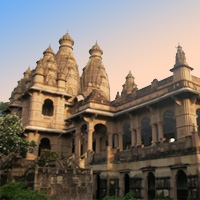
Naulakha Mandir: Located 2 km away, the Naulakha Mandir resembles the architecture of the Ramakrishna Math Belur in Kolkata. The temple houses beautiful idols of Radha and Krishna. Queen Charushila, from the Pathuria Ghat royal family of Kolkata, donated ₹9 lakhs for the construction of this mandir—hence the name “Naulakha.”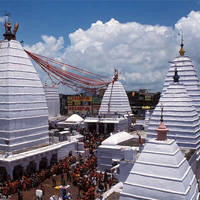
Ramakrishna Mission Vidyapith: This renowned educational institution is run by the monks of the Ramakrishna Ashram. Established in 1922, it is one of the oldest schools of the Ramakrishna Mission. Visits by the disciple brothers of Swami Vivekananda have added to its spiritual and historical significance.
Rikhiapeeth: Located in the rural village of Rikhia Panchayat, Rikhiapeeth is known for being home to enlightened rishis, sages, and spiritual masters. Also called the “Tapobhumi”, it is famous for the teachings of Swami Satyananda Saraswati and is regarded as one of the finest centres for yogic studies in the region.
Trikut Hill: Located 13 km from Deoghar, Trikut Hill features three prominent peaks, which is why it is also known as Trikutachal. The Trikutachal Mahadeva Temple, dedicated to Lord Shiva, is situated at the summit. A ropeway system allows visitors to reach the top easily. Notably, the hill is also home to India’s first solar energy hub.
Excursions from Deoghar: Travellers can explore nearby destinations such as Godda (70 km), Giridih (79 km), Bhagalpur (123 km), Barauni (171 km), and Rajgir (189 km).
Shopping in Deoghar: Tourists can purchase beautifully crafted marble idols of Lord Shiva and other local handicrafts.
When to Reach: The best time to visit Deoghar is during the Shraavana month or during the three major fairs—Shri Panchmi Mela (January), Shivaratri Mela (March), and Bhadra Purnima (September).
 How to Reach
Air: The nearest airport to Deoghar is in Patna, located 270 km away. Patna Airport offers good domestic connectivity.
Rail: The nearest railway station is Jasidih, situated 8.6 km from Deoghar.
Road: Buses and taxis are available from Ranchi, the capital of Jharkhand, which is about 276 km away.