 Sikkim is the soul of India — pure, gentle, and serene are the most fitting words to describe its charm and uniqueness. Among its many stunning destinations, Mangan in Sikkim stands out as a truly special place that will make you fall in love with its natural beauty.
Also known as the 'Cardamom Capital', Mangan serves as the district headquarters of North Sikkim. Travel to Mangan for picnics, nature exploration, and peaceful family holidays.
Mangan sightseeing includes visits to monasteries, museums, historical sites, and wildlife sanctuaries. The town also serves as a base camp for treks to remote parts of Sikkim, including Yumthang Valley and Lachung.
The history of Mangan reveals that this town was once a small village famous for its water wheels with bells. As tourism flourished and more visitors came to admire its beauty, Mangan gradually evolved into a major travel hub.
Don’t forget to carry your camera while visiting the Rhododendron Sanctuary, especially during spring. The vibrant flowers make a perfect backdrop for stunning photos and memories!
Following are the main travel attractions of Mangan:
Phodong Monastery
Monasteries in Sikkim are not just spiritual centers — they are the lifeline of Sikkim’s rich cultural and ethnic heritage. Visit the Phodong Monastery to witness how these sacred places influence the lives of the local people.
Built in the early 18th century by Chogyal Gyurmed Namgyal, the monastery is one of the six most important Buddhist monasteries in Sikkim. It has been rebuilt twice and remains a stunning example of Sikkimese architecture.
Situated at an altitude of about 4,500 ft, the monastery offers a breathtaking view of the surrounding mountains. It features beautiful paintings, frescoes, and antique murals, and is home to nearly 260 monks. Visit this serene site if you seek peace of mind and a meditative atmosphere.
Phodong is one of the three major monasteries of the Kagyu sect in Sikkim and is often regarded as one of the most beautiful in the state. An annual puja is held here on the 28th and 29th days of the 10th month of the Tibetan calendar, featuring the famous Cham dance.
Labrang Monastery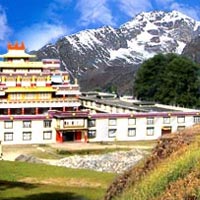 Unlike most monasteries in Sikkim that were reconstructed, Labrang Monastery still stands in its original form and remains remarkably well preserved.
Surrounded by dense green forests, the white walls and golden roofs of the Gompa display a unique Tibetan architectural style. The monastery has 18 halls, six learning centers, a debate hall for sutras, a golden stupa, and houses over 60,000 Buddhist scriptures.
It was built by Gyalshe Rigzing Chempa in 1814 and follows the Nyingma school of Tibetan Buddhism. It was established to honor Latsun Chembo of Kongpu, Tibet, who introduced this sect to Sikkim. The word ‘Labrang’ literally means ‘the Lamas’ dwelling.’
The monastery also houses a Buddhist museum displaying statues, murals, and Tibetan-language manuscripts. Visitors can also buy medicines, art objects, calendars, and music items from nearby shops.
Rong Lungten Lee
This is a museum built in the style of a traditional Lepcha house. Inaugurated in 2003, it has three rooms and an attic called ‘phahong,’ used to store valuables. Various Lepcha artifacts and antiques are displayed here.
The museum is situated at the confluence of two rivers, offering panoramic views of the area — especially beautiful during the monsoon when flowers bloom around the site.
Shingba Rhododendron Sanctuary
This sanctuary is home to around 40 species of rhododendrons and offers an excellent opportunity to explore Sikkim’s flora and fauna. Spring is the best time to visit Mangan when the hills are covered with colorful blossoms.
The Yumthang River flows through the sanctuary, enhancing its scenic charm. Other plant species include primulas, poppies, junipers, maples, and gentians. Wildlife includes tigers, civet cats, magpies, and blood pheasants — and you may even spot the Kiang, the wild ass of Tibet.
Excursions from Mangan
Tourists can take short trips to nearby destinations like Singtam (33 km) and Yumthang Valley (77 km).
Shopping in Mangan
Mangan is famous for its large cardamom production, which is primarily grown in Sikkim. You can also buy jams, liquors, alpine cheese, horse saddles, bone trumpets, and gold and silver trinkets during your trip to Mangan.
The town is also known for its Food Festival, where local handicrafts made of bamboo and paper are sold. Popular local dishes like momos, thukpa, fakthu, and wontons can be enjoyed during the event.
 When to Reach
July to September is the ideal time to visit Mangan. You can also plan your trip during the famous three-day Music Festival (December), held every year.
How to Reach
Air: Bagdogra Airport (103 km) is the nearest airport to the town.
Rail: New Jalpaiguri Station (147 km) is the closest railway head connecting Mangan to other parts of North-East India and West Bengal.
Road: Regular buses, jeeps, and taxis operate from Gangtok to Mangan.
Travel to Mangan and discover one of Sikkim’s most serene, unspoiled, and enchanting destinations. Sikkim Tourism promises to leave you fulfilled, enriched, and rejuvenated.