The Pride of Central India
The Pench National Park is located in the Chhindwara District and the Seoni District of Madhya Pradesh. It is peacefully nestled in the foothills of the Satpura Hills. It derives its name from the Pench River which flows through the national park and approximately divides it into two equal parts. Located in the southern part of Madhya Pradesh, the boundaries of the National Park also extend to Maharashtra.
The rich topography and geography of the national park have been mentioned in ancient texts and also in the documentation of the British writer Forsyth. It is widely believed that Rudyard Kipling’s “The Jungle Book” and “The Second Jungle Book” were inspired by the forests of the Pench region. It was declared a wildlife sanctuary in 1983 and later, in 1992, it was brought under the Project Tiger initiative.
The main tourist attractions in the Pench National Park are as follows
Flora: Shrubs and bamboo trees are interspersed with tropical deciduous trees found in the national park. The commonly found trees here are Mahua, Tendu, Amaltas, Bija, and Palas. A highlight of the park is the striking Kullu Tree (a type of gum tree). Visitors can also spot various grasses, herbs, shrubs, and climbers that make up the ground vegetation. The rich flora of Pench supports the breeding of herbivores, birds, and insects. Several exotic and rare herbs found in the park are known for their medicinal properties.
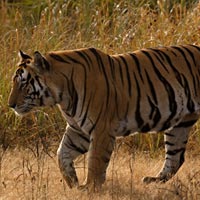
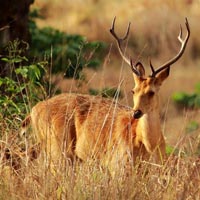
Fauna: The Indian tiger and leopards are the major attractions of Pench National Park. Other commonly sighted species include sloth bears, wild dogs, Rhesus monkeys, Nilgai, Chital, Barking Deer, and Mouse Deer. According to the 2007 census, the national park recorded approximately 15 tigers, 12 leopards, 2032 chitals, 966 sambhars, and 310 gaurs. Pench is home to 33 species of mammals, 50 species of fish, 15 species of butterflies, and 10 species of amphibians. Among birds, the commonly observed ones are mynas, munias, wagtails, orioles, minivets, and bulbuls.
Excursions from the Pench National Park
Tourists can explore more wildlife experiences by visiting the following places:
Water Reservoirs: The national park houses the Lower Reservoirs and the Meghdoot Reservoirs. The Ambakhori Falls are located within the Pench Tiger Reserve. The lush forests and cascading waterfalls offer a delightful scenic experience.
Nagpur: Located 160.3 km from the Pench National Park, Nagpur—fondly known as the Orange City—is famous for its temples, handicrafts, tribal dances, and cultural programmes.
Jabalpur: Located 179.5 km from Pench, Jabalpur is known for its waterfalls, historical monuments, ponds, and hills. It is also considered a gateway to central Indian wildlife destinations.
Bandhavgarh National Park: Located 38.9 km from Pench, Bandhavgarh is situated in the Vindhya Hills of Madhya Pradesh and is renowned for its population of Royal Bengal Tigers.
When to Visit:
The best time to visit Pench National Park is during the summer season.
It remains open to visitors from 1st October to 15th June.
How to Reach:
Air: The nearest airport is Sonegaon Airport in Nagpur,
located approximately 70 km away.
Rail: The nearest railway station is Nagpur. The
Seoni Railway Station is also located 30 km away.
Road: The major cities of Madhya Pradesh are well connected to the
national park by well-maintained roads.