Overview
Velha: The Land of the Famous Procession of Saints
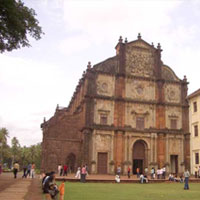
Recognized by UNESCO as a World Heritage Site in Goa, the small rustic settlement of Velha is located at the site of the ancient port of Govapuri. It was once the thriving capital of Portuguese Goa during the 16th century and was a populous city in its time. Embellished by the Mandovi River, Velha’s charm gradually declined during the 17th century. Goa Velha Tourism is especially known for its yearly Procession of Saints at St. Andrew’s Church, a tradition believed to have existed even before the arrival of the Portuguese.
This Old Port of Govapuri was an important trade centre for the Kadamba Dynasty and later for the Vijayanagar Empire. In the 15th century, several wars between the Deccan Sultanates and Vijayanagara led to the devastation of Govapuri. The Adil Shahi Dynasty later built a new port city on these ruins. When the Portuguese took over, they made it the capital of Portuguese India and named it Goa Velha.
Following are the main attractions of Velha:
Adil Shah's Palace Doorway: These are the only existing remnants of the Palace of Adil Shah, the Islamic ruler of Goa prior to Portuguese rule. Before their arrival, Adil Shah governed Goa from Bijapur in Karnataka. This palace doorway was built as a memorial before surrendering the land to the Portuguese. The structure showcases both Muslim and Hindu architectural elements. The dark-coloured doorway stands alone on a plinth, accessible via five steps, and is located close to the Mandovi River in Goa.
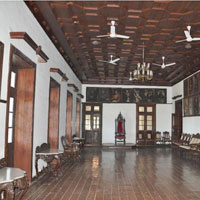 Archbishop Palace: Housing a gallery of Christian art, this building served as the audience hall for the archbishop during the colonial era. It is noted for its exquisite design and serene ambiance. This palace is one of the few remaining examples of civil architecture in Goa Velha. Its construction began in the 16th century, connecting it directly with the Sé Cathedral. When viewed from the Mandovi River, it once appeared castle-like and majestic.
Augustinian Monastery: Now in ruins, this monastery was once the grandest building in the colony. Built in 1572 and later renovated by the Portuguese, it is still regarded as one of the most spectacular architectural remains of antiquity. Its 46m-high tower continues to be a prominent landmark.
Viceroys' Archway: This was the ancient entrance to the city, set along the Mandovi River. Built in 1599 AD, it is popularly known as the ‘Gateway to Goa.’ Historical records note this as the point from where the Portuguese first entered Goa Velha.
Excursions from Velha
Visitors can explore nearby places such as Maina (2.8 km) and Batim Lake (3 km) during their trip to Goa Velha.
Shopping in Velha
Velha offers beautifully crafted tiles, flooring articles and traditional Goan art and handicraft items.
When to Reach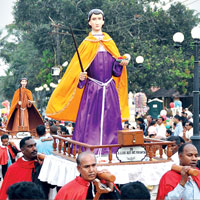
The ideal time to visit Goa Velha is from October to April. The famous Procession of Saints held in March is also a popular time for Goa Velha travel.
How to Reach
Air: Dabolim Airport is the nearest airport, with flights from all major cities of West India. Chartered flights from several European cities are also available.
Rail: Margao Railway Station is the most convenient railhead for reaching Velha.
Road: Interstate buses operate regularly, connecting Velha with various parts of Goa.