Overview
Kathakali: The dramatic art of story-telling
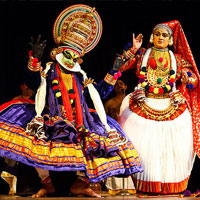
Detailed gestures, flawless body movements, elaborate costumes, attractive make-up and the heart-touching narrative of Kathakali—one of the most renowned classical dance-dramas in India—are a beauty to witness. The term 'Kathakali' denotes 'Story Play'. The long, intense and exquisite performances of Kathakali often leave audiences spellbound. Many tourists explore this unique aspect of Kerala’s culture, and several foreign scholars have researched the history, impact and nuances of Kathakali as a dance form and story-telling tradition.
History
The roots of Kathakali trace back to the essence of Hindu mythological themes, especially classical tales such as the Ramayana and the Mahabharata. The long, synchronous and dramatic performances showcased by Kathakali artists take years of rigorous practice and perfection. The elaborate masks and make-up worn by the dancers are associated with Kerala’s legends and mythology. The addition of vocals and percussion instruments further enhances the dramatic appeal of the dance.
Following are the important features of Kathakali:
Costume: The heavy and elaborate costumes of Kathakali intensify the dramatic effect of the performance. Different costumes are worn to portray specific character types such as Minukka (females), Kathi (villains), Sathwika (heroes) and Thatti. The make-up and costume together immediately indicate the character being depicted.

Music: Carnatic music forms the musical foundation of Kathakali, enhancing the clarity and rhythm of its precise body movements. Instruments commonly used in Kathakali performances include the Shuddha Madalam, Idakka and Chenda.
Innovations: Since its evolution in the 17th century, Kathakali has witnessed many adaptations and innovations. For instance, more refined shades of make-up have been introduced over the years, enhancing the visual impact and emotional depth of the performances.
Hand gestures: There are 24 basic mudras (hand gestures) used in this dance form. Some include 'Asamyutha Mudras' (single-hand gestures) and 'Samyutha Mudras' (double-hand gestures), along with many symbolic gestures. In total, nearly 470 different symbols are used in Kathakali.
Thus, this world-renowned art form is a distinctive and captivating part of Kerala's cultural heritage. Kathakali offers a journey into one’s inner self while presenting the richness of Hindu legends, the beauty of Carnatic music, and the power of dramatic storytelling.