
“A quiet, secluded life in the country, with the possibility of being useful to people to whom it is easy to do good, and who are not accustomed to have it done to them; then work which one hopes may be of some use; then rest, nature, books, music, love for one's neighbor — such is my idea of happiness.” – Leo Tolstoy.
If the essence of these words has stirred a longing in your soul, then perhaps Chamba is calling you. This quaint hill station in Himachal Pradesh is famed for its relaxed, peaceful and uncluttered lifestyle. Located between Tehri and Kanatal, it is a popular stopover for travellers on road trips. The fresh, cool morning breeze—especially during summers—offers a soothing caress, while the distant murmur of the Ravi River adds musical charm to the ambiance. With moonlight drenching the hills in romantic hues, Chamba promises the best of pastoral retreat in India.
The enticing magic of Chamba can be captured through words like ‘road less travelled,’ ‘treasure trove,’ and ‘cloudy paradise.’ Many tourists explore it as a halt en route to Yamunotri and Gangotri. Set amidst lush green mountains, shimmering waterfalls and streams, it is a refreshing delight for nature lovers.
History of Chamba suggests that the region was originally inhabited by the Kolian tribes. Later settlements included the Khasas and Shiva-worshipping Audmabaras. During the Gupta Period in the 4th century AD, the region came under the rule of Thakurs and Ranas who considered themselves superior to the tribal communities. With the rise of the Gurjara Pratiharas in the 7th century AD, the Rajput dynasty gained prominence. The area later came under Mughal influence, eventually followed by the Sikh Kingdom. Today, its accessibility—being just 2 hours from Rishikesh—adds to its appeal.
Do not miss the ethereal morning mist drifting across the valley settlements. Be sure to witness the clouds hovering over the snow-clad Himalayan peaks of Thalay Sagar and Jonli.
Following are the main travel attractions of Chamba:
Lakshmi Narayan Temple
Built by King Sahil Verman in the 10th century, this temple is dedicated to Lord Vishnu and Goddess Lakshmi. The complex features six main shrines built in the Shikhara architectural style. Just outside the complex stands a typical Nepali-style tower topped with a statue of Garuda, Vishnu’s devoted companion. Other temples in the complex are dedicated to Radha-Krishna, Shiva, Gauri-Shankar, Trimbakeshwar Mahadev and Lakshmi-Damodar.
Bhuri Singh Museum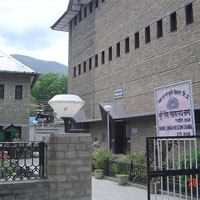
Named after the famed ruler Raja Bhuri Singh, this museum houses masterpieces from the Chamba, Kangra and Basohli schools of painting. Its exhibits include copper plates, murals, doorways, costumes, paintings and stone carvings. It is a must-visit for history enthusiasts.
Champavati Temple
Built by King Sahil Verman in memory of his daughter Champavati, this temple follows the Shikhara architectural style and features intricate carvings. The presiding deity is Goddess Mahishasura Mardini, an incarnation of Goddess Durga.
According to legend, Champavati was deeply religious and regularly visited temples and ashrams. The king grew suspicious of her frequent visits and once followed her. Upon reaching an ashram, he found that both Champavati and the saint had vanished. On his return, a divine voice proclaimed that his daughter had been taken away as punishment for his suspicion, and instructed him to build a temple in her honor to prevent future misfortunes. The king immediately commenced its construction.
Akhand Chandi Palace
Known for its distinctive green roofs, this palace was built by Raja Umed Singh between 1747 and 1765 as his personal residence. Renowned for its unique architectural style, the building now functions as a college.
Chaugan
This large grassy meadow lies at the centre of Chamba town and serves as the hub of local activities.
Manimahesh
A sacred lake associated with Lord Shiva, it is also referred to as Dal Lake in local dialects. It holds high religious significance during the Manimahesh pilgrimage.
Vajreshwari Temple
Dedicated to Goddess Vajreshwari, the deity of lightning, this ancient temple is believed to be nearly 1000 years old. Located at the northernmost corner of the town, the shrine is built in the Shikhara style and features traditional wooden umbrellas.
Excursions from Chamba
Travellers can explore nearby places such as Jhamwar (10km), Sarol (11km) and Sahoo (12km).
Shopping in Chamba
Shoppers can find souvenirs made of metal, wood and stone. Chamba is especially famous for its traditional chappals (footwear) and embroidered handkerchiefs.
When to Reach
The ideal time for a Trip to Chamba is between April and October. The Minjar Fair (July–August) is also a popular time to visit.
How to Reach
Air: The closest airports are in Jammu and Amritsar, with flights connecting to major Indian cities.
Rail: Pathankot is the nearest railway station, located 103 km away.
Road: Chamba is well-connected by road and can be accessed from Delhi and many cities in Uttarakhand.
In a nutshell, a Trip to Chamba goes beyond pre-planned itineraries. It unfolds spontaneously, offering the charms of a dreamy paradise in Himachal Pradesh. Nothing rejuvenates the soul quite like this enchanting destination. Give it a go and feel the change within you.